
Unveiling the Dynamics of a Multi-Billion Dollar Industry
In an era where smartphones have become extensions of the human experience, the ecosystem that supports them has grown into a formidable industry of its own. The Mobile Accessories Market represents a vast and dynamic sector, encompassing everything from protective cases and charging solutions to advanced audio devices and wearable integrations. As of 2024, this market was valued at a staggering 225.86 USD Billion, underscoring its critical role in the global technology landscape. This industry thrives on the symbiotic relationship with the ever-expanding smartphone user base, which is projected to reach approximately 6.8 billion users worldwide. From essential items like chargers and cables to lifestyle products that reflect personal style, mobile accessories have transitioned from optional add-ons to indispensable daily companions.
Market Overview and Introduction
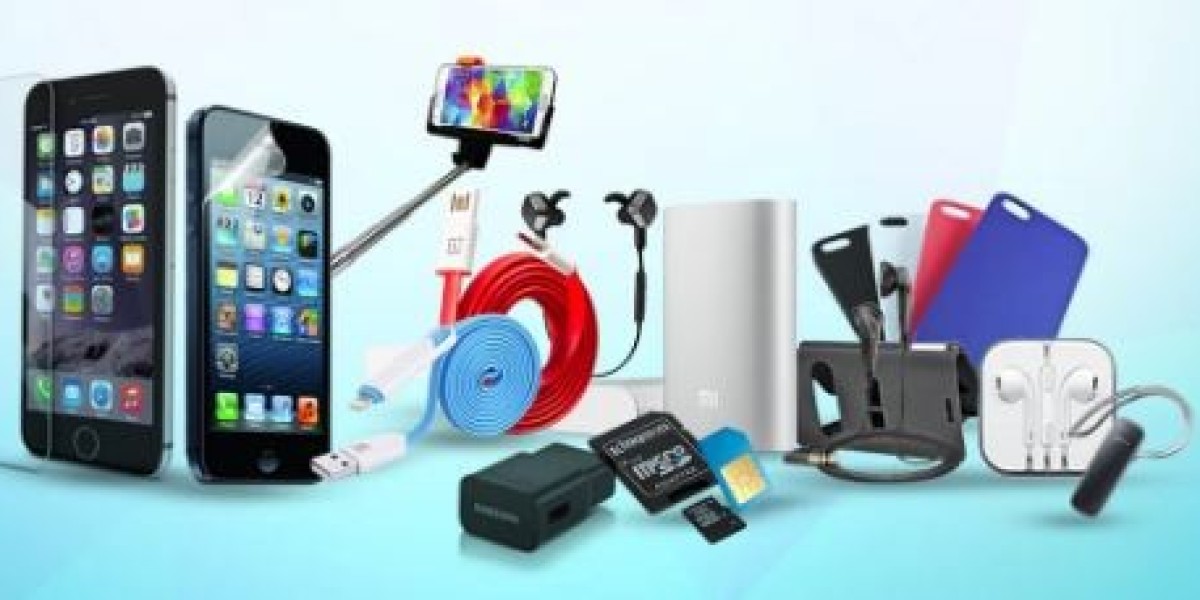
The mobile accessories market is characterized by its immense diversity and rapid evolution. It serves a global audience that demands not only protection and functionality but also personalization and technological synergy. The market is segmented into a wide array of product types, including chargers, cables, screen protectors, cases, and headphones. Among these, chargers have historically held the dominant market share due to their essential nature, while headphones have emerged as the fastest-growing segment, fueled by advancements in wireless audio technology and the increasing consumption of media on mobile devices. The distribution landscape is equally varied, with online retail capturing the largest share due to convenience and variety, while offline retail remains vital for providing tangible, experiential shopping. This complex ecosystem is driven by a blend of technological innovation, shifting consumer behaviors, and the relentless penetration of smartphones across developed and emerging economies.
Key Growth Drivers
Several powerful drivers are propelling the growth of the mobile accessories market. Foremost among these is the rising smartphone penetration worldwide. As smartphones become more affordable and essential for communication, commerce, and entertainment, the demand for complementary accessories naturally surges. This is particularly evident in developing regions where the first-time purchase of a smartphone often includes a protective case and screen protector. Another significant driver is the continuous stream of technological advancements. Innovations in wireless charging, fast-charging protocols (such as GaN technology), and true wireless stereo (TWS) earbuds have created new product categories and encouraged upgrades. Furthermore, increased consumer spending, especially in emerging economies with rising disposable incomes, allows individuals to invest in premium and multi-functional accessories, moving beyond basic necessities to products that enhance lifestyle and productivity.
Consumer Behavior and E-commerce Influence
Consumer behavior in the mobile accessories market is heavily influenced by the desire for personalization and the convenience of online shopping. Modern consumers view accessories as a form of self-expression, leading to a growing trend for customization and personalization. This is evident in the booming market for uniquely designed cases, customizable skins, and a wide variety of color options for headphones. E-commerce platforms have become the primary discovery and purchase channel for many, offering unparalleled access to global brands, user reviews, and competitive pricing. The rise of social commerce and influencer marketing has further shaped purchasing decisions, with consumers often adopting accessories endorsed by their favorite tech reviewers or lifestyle influencers. The online retail segment dominates the distribution channel, but the tactile, instant-gratification experience of offline retail remains crucial, especially for higher-value items like premium headphones, where consumers prefer to test audio quality and fit before purchasing.
Regional Insights and Preferences
The mobile accessories market exhibits distinct regional characteristics. The Asia-Pacific region stands as the undisputed leader, projected to reach $130.0 billion by December 2025. This dominance is fueled by rapid urbanization, high smartphone penetration, and the presence of major manufacturing hubs and key players like Samsung and Anker in countries such as China, Japan, and South Korea. North America represents a mature, tech-driven market projected at $45.0 billion, characterized by high consumer demand for premium, innovative products from brands like Apple, Belkin, and OtterBox. Europe, with a projected value of $35.0 billion, is distinguished by stringent regulations that promote product safety and sustainability, driving demand for eco-friendly accessories. Meanwhile, the Middle East and Africa represent an emerging market with immense potential, projected to reach $15.86 billion, driven by a young, tech-savvy population and increasing smartphone adoption in urban centers.
Technological Innovations and Emerging Trends
Innovation is the lifeblood of the mobile accessories market. The integration of smart technology is a defining trend, with accessories evolving from passive tools to active, intelligent devices. This includes headphones with adaptive noise cancellation and health monitoring features, and chargers capable of communicating with devices to optimize power delivery. The development of gallium nitride (GaN) chargers has revolutionized the charging segment, offering smaller, more efficient, and faster-charging solutions compared to traditional silicon-based chargers. Furthermore, the concept of ecosystem integration, as championed by companies like Apple with its MagSafe technology, is creating seamless experiences where accessories are deeply integrated with the device’s software and hardware. Sustainability is also a major technological focus, with manufacturers exploring biodegradable materials, recycled plastics, and modular designs that extend product lifecycles and reduce electronic waste.
Sustainability and Eco-friendly Practices
Sustainability has shifted from a niche consideration to a core market driver, particularly in regions like North America and Europe. Consumers are increasingly aware of the environmental impact of electronic waste and are seeking products made from sustainable materials. In response, major players are adopting eco-friendly practices. Apple, for instance, has introduced FineWoven cases made from durable micro-twill, a material designed to have a lower carbon footprint than leather. Samsung is expanding its product range to include more sustainable materials. Beyond materials, companies are implementing recycling programs and focusing on energy-efficient manufacturing processes. This focus on sustainability not only meets consumer demand but also aligns with global initiatives aimed at reducing electronic waste, enhancing brand image, and opening up new market segments for environmentally conscious products.
Challenges, Competition, and Risks
Despite its robust growth, the mobile accessories market faces significant challenges. The market is moderately fragmented, leading to intense competition, particularly in lower-priced segments where counterfeit and low-quality products abound. This forces established brands to continuously innovate and differentiate on quality, reliability, and ecosystem integration to justify premium pricing. Supply chain vulnerabilities, exposed during global disruptions, remain a risk, especially for manufacturers reliant on specific components or regions. The rapid pace of technological change also presents a challenge; a shift in smartphone design, such as the removal of a charging port or a change in connector type, can render entire accessory lines obsolete overnight. Additionally, navigating the complex landscape of intellectual property and licensing (such as Apple’s MFi program) is a constant hurdle for accessory makers.
Future Outlook and Investment Opportunities
The future outlook for the mobile accessories market is exceptionally bright, with projections indicating growth from 244.61 USD Billion in 2025 to 543.05 USD Billion by 2035, at a robust CAGR of 8.3%. This growth will be fueled by the continued expansion of the smartphone user base and the emergence of new technologies. Significant investment opportunities lie in the development of eco-friendly accessory lines, which are poised to capture a growing segment of environmentally conscious consumers. The integration of smart wearables with mobile devices presents another frontier, as does the pursuit of strategic partnerships with mobile manufacturers for exclusive accessory bundles. As the lines between mobile devices, health tech, and personal computing continue to blur, the accessories that bridge these worlds will be at the forefront of innovation and market growth.
Conclusion
The mobile accessories market is a vibrant and essential pillar of the global technology economy, driven by innovation, personalization, and the ubiquitous nature of mobile devices. With a strong growth trajectory projected through 2035, the market is navigating challenges related to competition and sustainability while capitalizing on opportunities in smart technology and eco-friendly design. As consumer needs evolve and technology advances, the accessories that enhance, protect, and personalize our mobile experiences will remain indispensable, solidifying the market’s critical role in the digital age.
Find comprehensive Market coverage through multilingual versions in JA, DE, FR, KO, CN, and ES
Marché des accessoires pour téléphones mobiles
Access Customized Regional And Country Reports:










