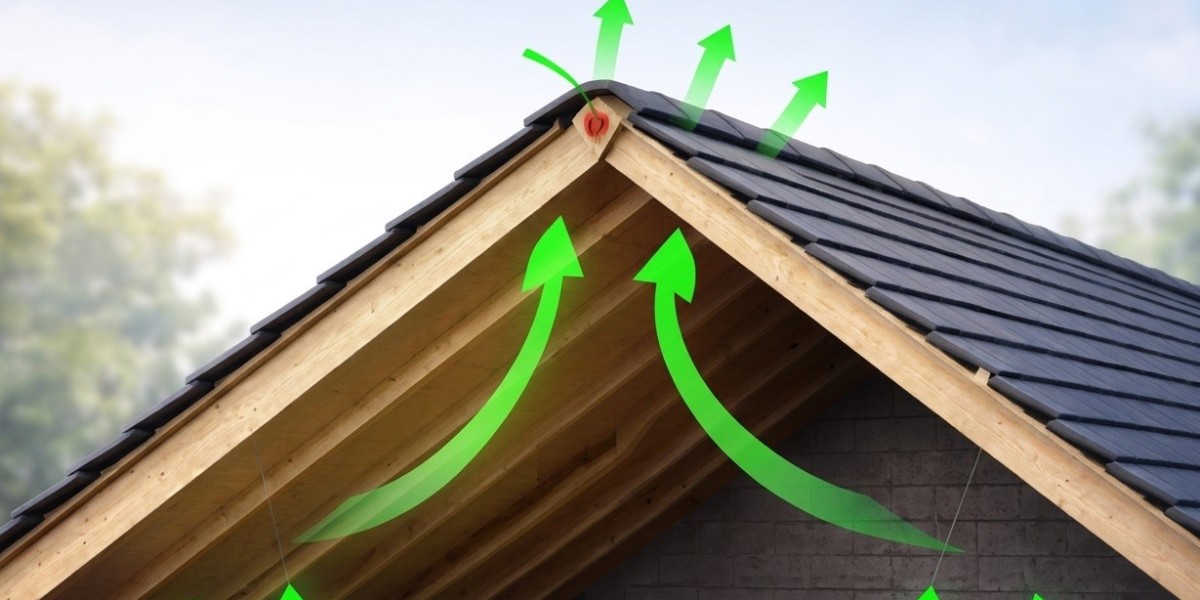

Roof ventilation helps air move through the roof space and attic area. A properly planned ventilation system can help manage heat and moisture that build up beneath the roof. When airflow is limited, conditions inside the roof space can change and create problems over time.
Poor ventilation does not always cause an immediate roofing problem. In many cases, the effects develop gradually. Trapped heat, excess moisture, and uneven airflow can affect roofing materials and other parts of the home.
Understanding how roof ventilation works can help homeowners recognize why airflow matters when building, replacing, or maintaining a roof.
How Does Roof Ventilation Work?
Roof ventilation allows air to enter and leave the roof space through properly placed intake and exhaust openings. The goal is to maintain a steady movement of air rather than simply adding as many vents as possible.
What Are Intake and Exhaust Vents?
Intake vents allow fresh outdoor air into the roof space. Exhaust vents allow warm or moist air to leave.
For the system to work properly, both sides need to work together. If exhaust openings exist without enough intake airflow, or if intake areas are blocked, the movement of air may be limited.
What Happens When Heat Gets Trapped Under the Roof?
Heat naturally builds up beneath a roof when sunlight warms the exterior surface. Without adequate airflow, that heat can remain trapped in the attic or roof space.
How Can Excess Heat Affect the Roof?
Continued heat exposure can place extra stress on roofing materials and the surrounding roof assembly. The attic can also become much warmer than the living areas below.
Problems linked with trapped heat may include:
- Higher attic temperatures
- Greater temperature changes within the roof space
- Added stress on roofing materials
- Increased demand on home cooling systems
The actual effect depends on the roof design, insulation, climate, and ventilation arrangement.
Can Poor Ventilation Cause Moisture Problems?
Moisture is another major concern when airflow through the roof space is limited. Warm indoor air can carry moisture upward, and that moisture may collect in cooler areas of the attic.
Why Is Moisture in the Roof Space a Concern?
Persistent moisture can affect wood components and other materials inside the roof assembly. It can also create conditions that encourage unwanted biological growth.
Moisture may enter the roof space through several routes, including indoor air movement, roof leaks, or outside weather. Good ventilation does not fix a roof leak, but proper airflow can help manage moisture under normal conditions.
How Can Moisture Affect Roofing Materials?
Roofing materials are exposed to outdoor weather, but the layers beneath them also need suitable conditions. Persistent moisture can affect decking, insulation, fasteners, and other components.
What Signs May Point to a Moisture Issue?
Some possible signs include:
- Damp areas in the attic
- Water staining on wood
- Musty smells
- Condensation around colder surfaces
- Changes in insulation condition
These signs can have several possible causes, so a professional assessment may be needed to identify the actual source.
Does Poor Roof Ventilation Affect Shingles?
Shingles can be affected by the conditions surrounding the roof system. Excess heat and moisture under the roof can create conditions that affect long-term material performance.
What Can Happen Over Time?
If the roof space remains excessively hot or damp, roofing materials may experience additional stress. This does not mean every ventilation issue will damage shingles, but ventilation is one part of the wider roofing system.
The age and condition of the shingles, installation quality, weather exposure, and moisture levels all matter when assessing the roof.
Can Poor Airflow Affect Insulation?
Ventilation and insulation serve different purposes, but they work within the same roof assembly. Insulation helps slow heat transfer, while ventilation manages air movement through designated areas.
Why Do Both Matter?
If insulation is installed incorrectly or ventilation paths are blocked, airflow can be reduced. For example, insulation placed over an intake path can prevent outdoor air from entering the roof space as intended.
A roofing system needs clear ventilation paths and correctly installed insulation so the two components do not interfere with each other.
How Can Poor Ventilation Affect Attic Conditions?
The attic can become one of the first areas where ventilation problems become noticeable. Without adequate airflow, heat and moisture may remain trapped for longer periods.
What Changes May Occur?
An attic with limited airflow may experience:
- Excessive heat during warm weather
- Condensation during cooler conditions
- Moisture accumulation
- Changes in insulation performance
- Uncomfortable temperature conditions
These conditions can affect more than the attic itself because the attic sits between the roof and the living areas below.
Why Is Balanced Roof Ventilation Important?
A ventilation system needs balance. Adding one type of vent without looking at the complete airflow path may not solve the problem.
What Should a Balanced System Include?
A suitable system generally needs:
- Adequate intake openings
- Suitable exhaust openings
- Clear airflow paths
- Properly placed vents
- Insulation that does not block ventilation channels
The exact setup depends on the roof's design, size, slope, climate, and construction.
Poor Ventilation vs. Proper Roof Ventilation
The difference between balanced airflow and poor ventilation can affect the conditions inside the roof space.
Roof Condition | Proper Ventilation | Poor Ventilation |
Air movement | Balanced airflow | Limited airflow |
Attic heat | Better managed | May become trapped |
Moisture | Better air movement | May accumulate |
Insulation | Vent paths remain usable | Airflow paths may be blocked |
Roof materials | More suitable roof-space | Added heat or moisture |
Attic environment | More balanced | Can become hot or damp |
Roof ventilation is only one part of a complete roofing system, but it can have an important role in managing heat and moisture. When airflow problems are suspected, speaking with roofers in Nashville TN can help identify whether the issue is related to ventilation, insulation, moisture entry, or another part of the roof assembly.
Can Poor Attic Ventilation Increase Moisture Levels?
Moisture can become a problem when warm, damp air does not move out of the roof space properly. During colder months, warm air inside the home can reach cold surfaces and form condensation.
his moisture can sometimes go unnoticed at first. It can slowly affect wood, insulation, fasteners, and other components within the attic.
What Can Continued Moisture Lead To?
Long-term moisture exposure may contribute to:
- Damp insulation
- Moisture marks on wood
- Corrosion on some metal components
- Unwanted biological growth
- Deterioration of certain roof materials
Ventilation can help manage normal moisture levels, but it cannot replace repairs when water is entering through a damaged roof.
How Can Poor Ventilation Affect Roof Decking?
Roof decking sits beneath the outer roofing materials and supports the roof surface. When moisture remains trapped in the roof space, the decking can be exposed to damp conditions.
Why Does Decking Condition Matter?
Damaged or weakened decking can affect the surface above it. If moisture has been present for an extended period, a professional inspection may be needed to assess the condition of the affected areas.
A ventilation issue and a roof leak can also exist at the same time. Identifying the actual source of moisture is important before deciding what work the roof needs.
Can Poor Airflow Affect Energy Use?
An excessively hot attic can affect the amount of heat transferred into the living areas below. During warm weather, this may place more demand on the home's cooling system.
Does Better Ventilation Lower Cooling Costs?
Ventilation can help manage heat within the roof space, but energy use depends on many parts of the home. Insulation, windows, air sealing, outdoor temperature, equipment, and household habits can all affect cooling needs.
For this reason, ventilation should be viewed as one part of the home's overall thermal system rather than a standalone way to reduce energy use.
What Can Happen When Roof Vents Are Blocked?
Roof vents need clear pathways for air to move. Insulation, debris, or incorrectly installed materials can block an intake or exhaust opening.
Why Can Blocked Vents Create Problems?
If air cannot move through the intended path, the ventilation system may not work as designed. Heat and moisture can remain trapped even when vents are technically present.
A roof inspection can help identify blocked openings and determine if the ventilation layout is suitable for the roof.
Can Poor Ventilation Affect Roof Lifespan?
The service life of roofing materials depends on several conditions, including material quality, installation, weather exposure, maintenance, and the environment beneath the roof.
Poor ventilation can create excessive heat or moisture, which may add stress to the roofing assembly.
Does Every Ventilation Problem Shorten Roof Life?
Not necessarily. The effect depends on how serious the airflow problem is and how long the condition has existed.
A roof with good materials and installation can still have ventilation concerns that need attention. Likewise, an older roof may have several unrelated issues that require assessment.
How Can Homeowners Address Roof Ventilation Problems?
The first step is identifying why airflow is inadequate. Simply adding another vent may not correct the underlying problem.
What Should Be Reviewed?
A professional assessment may look at:
- Intake vent locations
- Exhaust vent locations
- Airflow paths
- Insulation placement
- Roof and attic moisture
- Roof openings and flashing
- Existing roofing materials
The findings can help determine if the problem is related to blocked airflow, an unsuitable ventilation layout, moisture entry, insulation placement, or another issue.
When Should Roof Ventilation Be Checked?
Ventilation can be reviewed during several types of roofing work. A roof replacement is one opportunity because the roofing system is already being examined and rebuilt.
It can also be assessed when homeowners notice unusual attic heat, condensation, moisture marks, or recurring roofing concerns.
Why Check Ventilation During Roof Work?
A new exterior roof surface may not solve problems within the attic. Looking at ventilation as part of the complete roofing system can help address conditions beneath the shingles as well.
This can be especially useful when several roof components are being replaced or repaired at the same time.
What Should Homeowners Know About Roof Ventilation?
Roof ventilation is not simply about having vents installed. The vents need to work together and allow air to move through the intended areas of the roof space.
Poor ventilation can contribute to excessive heat and moisture, but those conditions can also have other causes. A careful assessment can separate ventilation problems from roof leaks, insulation issues, or damaged materials.
A balanced roofing system brings these elements together so that the roof, attic, insulation, and ventilation can function properly.
Final Thoughts
Modern Roofing USA Reviews can give homeowners another source of information when researching roofing professionals and reading about customer experiences. Along with reviews, it is useful to ask questions about attic airflow, intake and exhaust vents, insulation placement, moisture concerns, and the condition of the roofing system. Understanding the cause of a ventilation problem can help homeowners choose the right work instead of treating only the visible symptoms.









