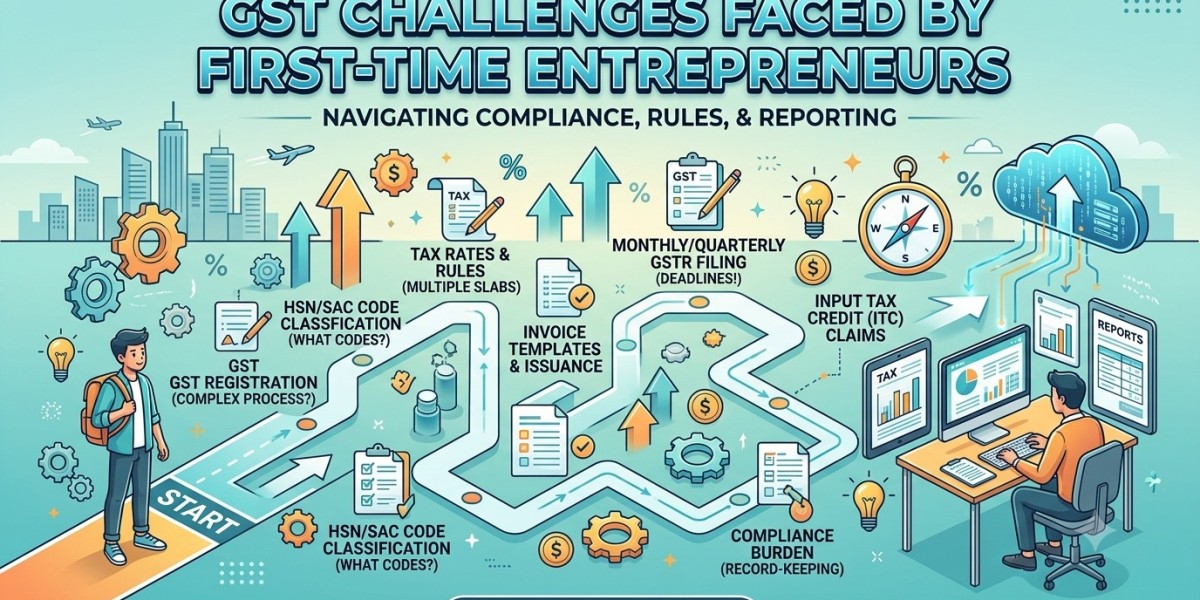

Starting a business is exciting, but it also comes with many responsibilities. One of the most important responsibilities for a new entrepreneur in India is understanding Goods and Services Tax (GST).
GST affects how a business registers, creates invoices, collects tax, claims Input Tax Credit (ITC), and files returns. For someone starting a business for the first time, these rules can feel confusing.
From choosing the right GST registration to keeping proper invoices and filing returns on time, there are several areas where new business owners can make mistakes.
This article explains the common GST challenges faced by first-time entrepreneurs and how businesses can manage them better.
What Is GST?
GST is an indirect tax charged on the supply of goods and services in India. Businesses that are liable for GST registration must obtain a GST Identification Number (GSTIN) and follow the applicable compliance requirements.
GST registration and related applications are handled electronically through the GST system. The registration process includes submitting PAN, mobile number, email address and other required information and documents.
For a new entrepreneur, understanding these requirements at the beginning can help avoid compliance problems later.
Common GST Challenges Faced by First-Time Entrepreneurs
1. Understanding Whether GST Registration Is Required
One of the first questions new entrepreneurs ask is:
“Do I need GST registration?”
The answer depends on factors such as the nature of the business, turnover, type of supply and other applicable conditions.
Some businesses may also become liable for registration because of specific circumstances, even when they are not simply relying on the general turnover threshold.
Entrepreneurs should therefore check their GST position before starting regular business operations.
2. Choosing the Correct Business and GST Details
During Online GST Registration, entrepreneurs need to provide correct information about their business.
Common details include:
Business name
PAN
Business constitution
Address
Bank details
Contact information
Nature of business
Goods or services supplied
Details of promoters or authorised persons
A small mistake in these details can create problems later. Therefore, entrepreneurs should check their documents carefully before submitting the application.
3. Understanding GST Rates
Another major challenge is selecting the correct GST rate.
Different goods and services may attract different GST rates. A new entrepreneur may accidentally charge the wrong rate on an invoice.
This can lead to:
Incorrect tax collection
Incorrect GST returns
Customer disputes
Additional tax liability
Interest or other compliance issues
Businesses should identify the appropriate classification and GST rate applicable to their products or services before issuing invoices.
4. Creating GST-Compliant Invoices
Invoices are an important part of GST compliance.
A new business owner may focus more on sales and forget to check whether invoices contain the required information.
Depending on the transaction, GST invoices generally require information such as:
Supplier details
GSTIN
Invoice number
Invoice date
Customer details
Description of goods or services
HSN/SAC details, where applicable
Taxable value
Applicable GST rate
CGST, SGST/UTGST or IGST
Total invoice value
Maintaining proper invoices also helps businesses maintain accurate accounting records and support eligible ITC claims.
5. Keeping Track of Input Tax Credit
Input Tax Credit allows eligible businesses to claim credit for GST paid on qualifying business purchases, subject to applicable conditions.
For first-time entrepreneurs, understanding ITC can be difficult.
They may not know:
Which purchases qualify for ITC
Which purchases are restricted
How supplier invoices affect ITC
How to reconcile purchase records
When ITC should be claimed or reversed
Maintaining proper purchase records and regularly checking GST data can help reduce mistakes.
6. Missing GST Return Filing Deadlines
GST compliance does not end after registration.
Registered businesses may have to file applicable GST returns or statements based on their registration type and activities. GST returns are filed electronically through the GST system.
For example, normal taxpayers generally have to deal with forms such as GSTR-1 and GSTR-3B, depending on their filing requirements.
GSTR-1 contains details of outward supplies, while GSTR-3B is used to declare GST liabilities and discharge the tax liability for the relevant period.
Missing deadlines can result in late fees and interest. Therefore, entrepreneurs should maintain a compliance calendar from the beginning.
7. Difficulty With GST Return Filing Online
GST Return Filing Online can become challenging when business records are not properly maintained.
Before filing returns, entrepreneurs may need to check:
Sales invoices
Purchase invoices
Credit notes
Debit notes
Input Tax Credit
Tax collected
Tax payable
Reverse charge transactions, where applicable
Previous return information
For example, GSTR-3B is a summary return and normally has to be filed for every applicable tax period. Even a business with no transactions may need to file a nil return if the conditions for nil filing are met.
8. Mixing Business and Personal Expenses
This is a common mistake among new entrepreneurs.
A business owner may use the same bank account or payment method for both business and personal expenses. This makes bookkeeping difficult and can create confusion when calculating business expenses and GST-related records.
It is better to maintain separate business records and, where appropriate, separate banking arrangements.
9. Not Maintaining Proper Records
GST compliance depends heavily on accurate records.
First-time entrepreneurs should maintain records of:
Sales
Purchases
Expenses
GST collected
GST paid
Credit and debit notes
Bank transactions
Tax payments
Filed returns
Good record keeping makes GST return preparation easier and also helps during reconciliations or tax-related queries.
10. Ignoring TDS and Other Tax Responsibilities
GST is not the only tax compliance that a growing business may have.
Depending on the nature of the business and payments made, entrepreneurs may also have responsibilities relating to Tax Deducted at Source (TDS).
For businesses that are required to deduct TDS, TDS Return Filing Online becomes an important compliance activity.
Entrepreneurs should understand whether TDS provisions apply to their business, especially when making payments to employees, professionals, contractors, vendors or other parties covered by applicable provisions.
11. Confusing GST With Income Tax
GST and income tax are different taxes.
GST is generally linked to the supply of goods and services, while income tax is based on taxable income under applicable income-tax provisions.
A new entrepreneur should therefore not assume that completing GST compliance means all tax compliance is complete.
Depending on the business structure and circumstances, the entrepreneur may also need to complete income tax-related compliance.
Professional Income Tax Return Filing Services can help businesses understand their income tax filing requirements and maintain the necessary records.
12. Not Reconciling Business Records
One of the biggest mistakes is assuming that the figures in accounting software, invoices and GST returns will automatically match.
They may not.
Differences can arise because of:
Missing invoices
Wrong invoice numbers
Incorrect GSTIN
Duplicate entries
Credit notes
Wrong tax rates
Incorrect ITC claims
Data entry errors
Regular reconciliation helps identify these problems before they become bigger compliance issues.
How Can First-Time Entrepreneurs Avoid GST Problems?
New entrepreneurs can follow a simple compliance routine.
Keep a GST Compliance Calendar
Maintain a calendar for all applicable GST return and payment deadlines.
Maintain Proper Invoices
Create invoices in a consistent format and check GST details before sending them to customers.
Separate Business Records
Keep business income and expenses properly recorded and avoid mixing them unnecessarily with personal transactions.
Reconcile Regularly
Compare sales, purchases, invoices, bank records and GST data regularly.
Track Input Tax Credit
Do not claim ITC blindly. Check whether the credit is eligible under applicable GST provisions.
Take Professional Help
If GST rules are difficult to understand, professional assistance can reduce the risk of mistakes.
How Corpbiz Can Help New Entrepreneurs
Starting a business involves many decisions, and GST compliance should not become a burden.
Corpbiz provides business and tax compliance support to entrepreneurs and businesses. Its professionals can assist with services such as GST registration, GST return compliance and other business-related tax requirements.
Entrepreneurs can seek professional support for Online GST Registration, GST Return Filing Online, Income Tax Return Filing Services, and TDS Return Filing Online, depending on their business requirements.
The right support can help a new business maintain better records, understand its tax responsibilities and focus more on business growth.
Conclusion
GST compliance can look complicated when you are starting your first business. However, most problems can be reduced by understanding the basic rules and maintaining proper records from day one.
The major GST challenges for first-time entrepreneurs include choosing the right registration, understanding GST rates, preparing correct invoices, managing Input Tax Credit, filing returns on time and keeping accurate records.
Entrepreneurs should also remember that GST is only one part of overall tax compliance. Income tax, TDS and other applicable obligations may also need attention.
Starting with an organised accounting and compliance system can save time, reduce mistakes and help your business grow with greater confidence.
FAQs on GST Challenges for First-Time Entrepreneurs
1. Is GST registration mandatory for every new business?
No. GST registration is not automatically mandatory for every business. The requirement depends on factors such as turnover, business activity, type of supply and other conditions under GST law.
2. Can I complete GST registration online?
Yes. GST registration applications are submitted electronically through the GST system. Businesses can complete the applicable registration process online.
3. What is GSTIN?
GSTIN stands for Goods and Services Tax Identification Number. It is the unique identification number issued to a registered taxpayer under GST.
4. What is GST Return Filing Online?
GST Return Filing Online means submitting the applicable GST return or statement electronically through the GST system. The form and filing frequency depend on the taxpayer's registration type and applicable requirements.
5. Is GST return filing required when there are no sales?
In some cases, yes. For example, applicable taxpayers may need to file a nil return even when there is no business activity for the relevant period. The exact conditions should be checked before filing.
6. What happens if I make a mistake in my GST return?
The action available depends on the type of mistake and the GST form involved. For example, GSTR-3B once filed cannot simply be revised; eligible adjustments may need to be made in a subsequent return.
7. What is Input Tax Credit?
Input Tax Credit is the credit of eligible GST paid on business purchases that can be used against applicable GST liability, subject to the conditions and restrictions under GST law.
8. Does a new entrepreneur also need to file an income tax return?
GST compliance and income tax compliance are separate. Depending on the business structure, income and applicable provisions, an entrepreneur may need to file an income tax return.
9. What is TDS Return Filing Online?
TDS Return Filing Online is the electronic submission of applicable TDS statements by persons who are required to deduct tax at source.
10. Should first-time entrepreneurs hire a tax professional?
Professional assistance can be useful when an entrepreneur is unfamiliar with GST, TDS, income tax or accounting requirements. It can help reduce compliance mistakes and save time.
About the Author
Atul Shukla is a legal and business compliance content professional who writes about taxation, regulatory compliance, business registration and legal requirements in India. His work focuses on explaining complex business and compliance topics in simple language so that entrepreneurs and business owners can understand them easily.










