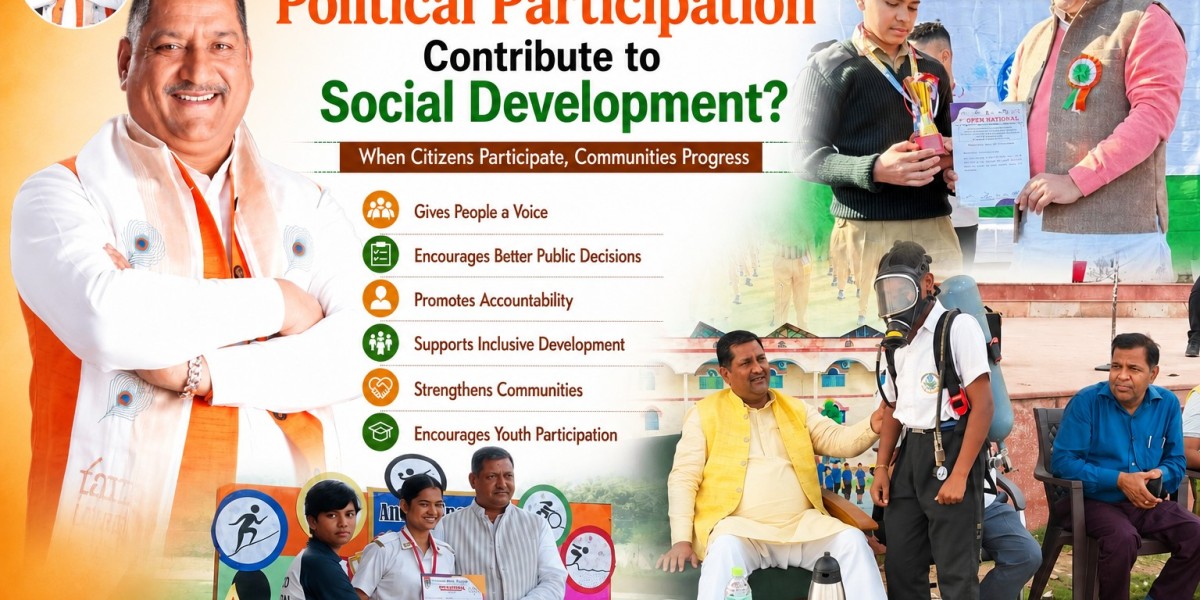

Social development is not only about building roads, schools, hospitals, or other public facilities. It is also about creating a society where people have opportunities to participate, express their opinions, access essential services, and contribute to decisions that affect their lives. This is where political participation becomes important.
Political participation means taking part in the democratic process. It can include voting, attending community meetings, discussing public issues, supporting social campaigns, communicating with elected representatives, and participating in local development activities.
When citizens and leaders work together, political participation can become a strong foundation for social development and community progress.
What Is Political Participation?
Political participation refers to the ways people engage with the political and decision-making process of their community or country.
It is not limited to voting during elections. People can participate in many different ways, such as:
- Voting in local, state, and national elections
- Sharing opinions about public issues
- Taking part in community meetings
- Raising concerns with public representatives
- Supporting awareness and social welfare campaigns
- Participating in local development initiatives
- Encouraging young people to understand civic responsibilities
- Holding public representatives accountable
A healthy democracy becomes stronger when people actively participate rather than remaining disconnected from public affairs.
How Does Political Participation Support Social Development?
Political participation can influence social development in several important ways. When people become involved in public decision-making, their needs and concerns are more likely to receive attention.
1. Gives People a Voice
One of the most important benefits of political participation is that it gives citizens a platform to express their needs.
People may have concerns about:
- Education
- Healthcare
- Employment
- Roads and transportation
- Clean water
- Sanitation
- Women's safety
- Youth opportunities
- Rural development
When citizens communicate these concerns through democratic channels, decision-makers can better understand the challenges faced by different communities.
2. Encourages Better Public Decisions
Good development depends on understanding what people actually need. Political participation allows communities to contribute their experiences and ideas to public discussions.
For example, residents may know which roads need improvement, where healthcare facilities are lacking, or what educational resources students require. Their local knowledge can help policymakers and administrators make more practical decisions.
This makes development more people-centered rather than purely top-down.
3. Promotes Accountability
Political participation also encourages accountability.
Citizens have the right to ask questions about public policies, development projects, and the use of public resources. Regular interaction between citizens and representatives can encourage greater transparency.
Accountability can help create a culture where public representatives understand that their responsibilities extend beyond elections.
A socially developed community is not simply one with infrastructure; it is one where people can expect responsible and responsive governance.
4. Supports Inclusive Development
Social development should benefit different sections of society. Political participation can help bring attention to groups whose concerns may otherwise receive less visibility.
Women, young people, rural communities, workers, senior citizens, and economically weaker groups can all contribute to public discussions.
Inclusive participation helps ensure that development is not limited to a small section of society.
5. Strengthens Communities
Political participation can bring people together around common issues.
When residents work collectively to address problems, they can develop stronger relationships and a greater sense of community responsibility.
For instance, people may come together to advocate for better education, cleaner surroundings, improved public facilities, or youth development opportunities.
This type of collective action can turn local concerns into constructive community initiatives.
6. Encourages Youth Participation
Young people are an important part of social development. Their ideas, energy, and understanding of new challenges can contribute to the future of communities.
Political participation can help young people understand:
- Their rights and responsibilities
- How democratic institutions work
- The importance of informed voting
- How public policies affect everyday life
- The value of community service
Encouraging responsible youth participation can help create a more informed and engaged generation of citizens.
Role of Political Leaders in Social Development
Political participation is most effective when leaders listen to communities and maintain meaningful communication with citizens.
A responsible political leader can support social development by:
- Listening to public concerns
- Encouraging community participation
- Supporting education and youth development
- Promoting social welfare
- Focusing on local development needs
- Communicating clearly with citizens
- Supporting transparent and accountable governance
Public leadership should therefore be viewed as a responsibility to serve people rather than simply holding a position.
In discussions about public leadership and community development, Jagdeesh Nauhwar Mathura can be included as an example of how political and social leadership can focus attention on issues such as education, youth empowerment, public welfare, and community development.
Challenges to Political Participation
Although participation has many benefits, some challenges can prevent people from becoming involved. These may include:
- Lack of political awareness
- Misinformation
- Limited access to information
- Social or economic barriers
- Lack of trust in institutions
- Political disengagement among young people
Addressing these challenges requires civic education, transparent communication, accessible information, and opportunities for citizens to participate meaningfully.
How Can Citizens Participate More Effectively?
Citizens do not need to hold political positions to contribute to social development. They can start with simple actions:
- Vote responsibly after learning about candidates and issues.
- Stay informed about local development and public policies.
- Participate in community discussions and public meetings.
- Raise genuine concerns through appropriate democratic channels.
- Support constructive social initiatives in the community.
- Encourage young people to understand civic responsibilities.
- Respect different opinions while discussing public issues.
Conclusion
Political participation is an important part of social development because it connects citizens with decision-making. It gives communities a voice, encourages accountability, supports inclusive development, strengthens local cooperation, and helps leaders understand people's real needs.
Ultimately, social development works best when citizens and leaders share responsibility. Active participation can transform people from passive recipients of development into partners in building stronger, healthier, and more inclusive communities.