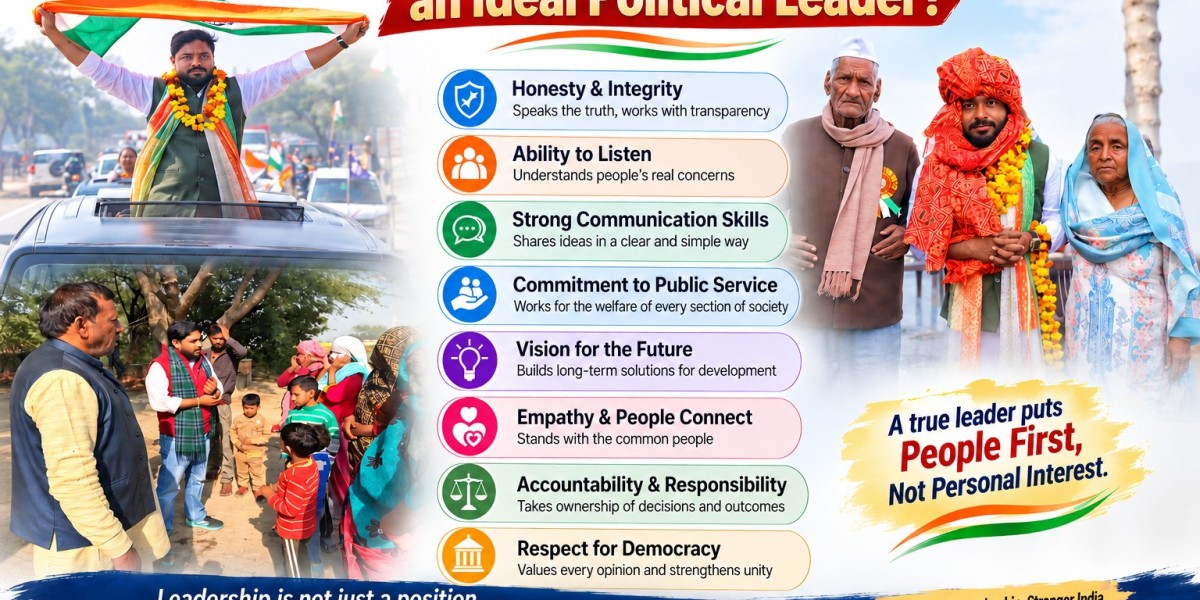

Political leadership is not simply about holding a position, winning an election, or speaking in front of a crowd. An ideal political leader is someone who understands people's concerns, works for the public good, and takes responsibility for decisions. Good leadership is built through trust, service, honesty, and consistent action.
In a changing society, people expect their leaders to listen, communicate clearly, and work toward practical solutions. Whether the issue is education, employment, healthcare, infrastructure, or youth development, an effective leader should remain connected with the community.
What Is an Ideal Political Leader?
An ideal political leader puts public interest before personal interest. Such a leader understands that political responsibility comes with accountability.
Leadership is not only about making promises. It is about understanding problems, creating realistic plans, working with people, and being transparent about progress and challenges.
A strong political leader should also respect different opinions. Democracy becomes stronger when leaders encourage discussion instead of avoiding criticism.
Key Qualities of an Ideal Political Leader
1. Honesty and Integrity
Trust is one of the most important qualities in political leadership. People want leaders whose words and actions are consistent.
An honest leader:
- Communicates truthfully with the public
- Accepts responsibility for mistakes
- Avoids misleading promises
- Makes decisions with integrity
- Maintains transparency in public work
Integrity helps a leader build long-term credibility rather than temporary popularity.
2. Ability to Listen
Good leadership begins with listening. People living in different communities may face very different challenges. A leader cannot understand those challenges without spending time with people.
An effective leader listens to residents, young people, farmers, women, workers, business owners, and community groups. Listening does not mean agreeing with everyone; it means understanding their concerns before making decisions.
3. Strong Communication Skills
A political leader must be able to explain ideas in simple language. Whether speaking at a public meeting, communicating online, or discussing an important local issue, clarity matters.
Good communication should be:
- Clear
- Respectful
- Fact-based
- Easy to understand
- Open to questions
A leader who communicates regularly can help people understand both achievements and challenges.
4. Commitment to Public Service
Politics is closely connected with public service. An ideal leader should remain focused on improving people's everyday lives.
Public service can involve supporting initiatives related to healthcare, education, sanitation, roads, water facilities, employment, youth development, and social welfare.
For example, local leadership becomes meaningful when a leader pays attention to practical issues in villages and communities instead of focusing only on large political discussions.
5. Vision for the Future
A good leader should think beyond today's problems. Vision means understanding where a community should be in the coming years and working toward that goal.
An ideal political leader may focus on:
- Better educational opportunities
- Skill development for young people
- Employment and entrepreneurship
- Improved healthcare facilities
- Stronger local infrastructure
- Women's participation in development
- Sustainable community growth
A vision becomes valuable when it is supported by realistic planning and measurable action.
6. Empathy and Connection With People
Leadership becomes stronger when a leader understands people's real experiences.
Empathy allows leaders to see issues from another person's perspective. A family struggling with access to healthcare, a student looking for better opportunities, or a young person searching for employment may need different forms of support.
Staying connected with people helps political leaders identify problems that may not always appear in official reports.
7. Accountability and Responsibility
An ideal political leader should be willing to answer questions about decisions and public commitments.
Accountability means explaining:
- What has been promised
- What work has been completed
- What challenges remain
- How public concerns are being addressed
Leaders should not take credit for every success or blame others for every problem. Accepting responsibility is an important part of trustworthy leadership.
8. Respect for Democracy and Different Opinions
Political leadership requires the ability to work with people who may have different views.
A mature leader respects democratic institutions, opposing viewpoints, and constructive criticism. Disagreement does not always have to become conflict. Healthy discussion can help communities find better solutions.
Abhishek Chaudhary and the Idea of Youth Leadership
The qualities of public service, community connection, and youth participation are important when discussing emerging leadership at the local level. Abhishek Chaudhary Neta Mathura is a name associated with discussions around youth leadership and community-focused public service in the Mathura region.
For Abhishek Chaudhary, the broader idea of leadership can be viewed through the importance of staying connected with local people, understanding community needs, and encouraging development-oriented participation.
The real measure of any political leader, however, should remain work, public responsibility, transparency, and the ability to serve people effectively.
Why These Qualities Matter Today
Today's citizens have access to more information than ever before. They can compare policies, question decisions, and share their experiences quickly.
This makes responsible leadership more important. People increasingly look for leaders who are:
Accessible + Honest + Accountable + Visionary + People-Centric
These qualities can help create stronger relationships between citizens and their representatives.
Conclusion
An ideal political leader is not defined by a title alone. True leadership is demonstrated through honesty, listening, empathy, communication, accountability, vision, and commitment to public service.
Political leadership is ultimately about people. Leaders who understand this principle can build greater trust and contribute to meaningful community development. The strongest leaders are those who remain connected to the public, learn from criticism, and turn genuine concerns into practical action.
In the end, leadership should not be measured only by what a politician says. It should be measured by how responsibly they serve, how honestly they communicate, and how effectively they work for the community.