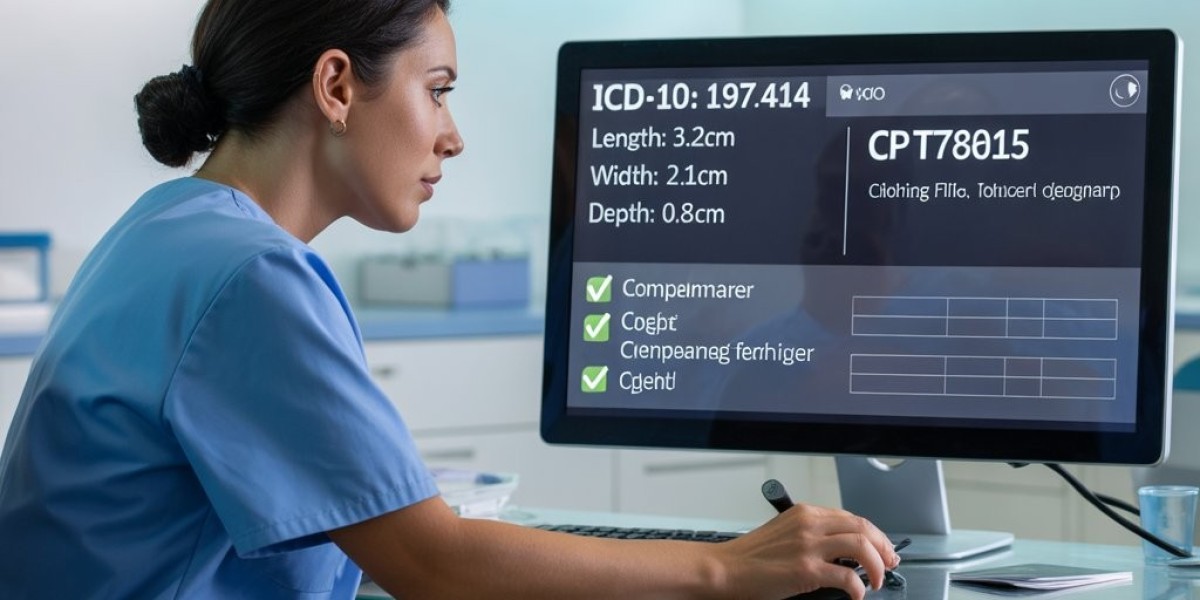

Introduction: Why CPT and ICD-10 Accuracy Is Critical in Wound Care
Wound care management is one of the most clinically and administratively intensive specialties in outpatient healthcare. From chronic diabetic foot ulcers to pressure injuries and venous stasis ulcers, providers manage complex cases that often require repeated interventions, advanced therapies, and multidisciplinary coordination. While clinical expertise drives patient outcomes, coding accuracy ensures that the value of care is recognized and reimbursed appropriately.
Understanding wound care CPT codes and ICD-10 documentation requirements is essential for providers seeking to optimize reimbursement, reduce denials, and comply with payer regulations. Medicare and commercial insurers increasingly scrutinize claims for documentation completeness, medical necessity alignment, and coding precision. Errors—such as inaccurate debridement depth, improper procedure code selection, or vague wound staging—can lead to claim denials, delayed payments, and potential audits.
This comprehensive guide explores the most important aspects of wound care CPT coding, ICD-10 specificity, documentation requirements, common errors, and best practices. By following these guidelines and leveraging structured workflows, including support from wound care billing services, providers can improve claim accuracy, enhance compliance, and protect revenue while maintaining focus on patient care.
Understanding CPT Codes in Wound Care
CPT codes (Current Procedural Terminology) describe the services provided during a patient encounter. In wound care, accurate CPT coding ensures that procedures are billed at the correct level of complexity and reimbursement. Common CPT code categories include:
1. Debridement Codes
Debridement removes necrotic, infected, or nonviable tissue to promote healing. CPT codes depend on tissue depth and surface area:
97597 – Debridement of open wound, including subcutaneous tissue, up to 20 sq cm
97598 – Each additional 20 sq cm of the same wound (add-on)
11042 – Debridement, subcutaneous tissue
11043 – Debridement, muscle
11044 – Debridement, bone
Accurate coding requires meticulous documentation of tissue depth, wound size, and total area treated.
2. Advanced Therapy Codes
Advanced wound interventions, such as cellular and tissue-based products, negative pressure wound therapy, and graft applications, require specialized CPT codes:
15271-15278 – Application of skin substitutes or grafts
97605-97606 – Negative pressure wound therapy
15734 – Muscle flap for wound coverage (specific cases)
Advanced therapies often trigger detailed payer review, making documentation and code selection critical.
3. Evaluation and Management (E/M) Codes
E/M codes reflect provider evaluation and treatment planning, often billed alongside procedural codes. Key considerations include:
Documentation must support distinct evaluation separate from procedures
Proper use of modifiers (e.g., 25) is required when E/M occurs on the same day as procedures
4. Modifiers in Wound Care
Modifiers clarify coding circumstances:
Modifier 25 – Significant, separately identifiable E/M service
Modifier 59 – Distinct procedural service
Modifier 76/77 – Repeat procedures
Incorrect or missing modifiers are a common source of claim denials.
ICD-10 Documentation Requirements
ICD-10 codes (International Classification of Diseases, 10th edition) provide diagnosis specificity and justify medical necessity. Accurate ICD-10 documentation is critical for payer compliance.
Key Elements Include:
Wound Type and Etiology – Pressure injury, diabetic ulcer, venous stasis ulcer, surgical wound, or traumatic wound
Location and Laterality – Right or left extremity, specific anatomical site
Severity or Stage – Pressure injury stage (1-4), ulcer depth, infection status
Comorbidities – Diabetes, vascular disease, neuropathy
Encounter Type – Initial, subsequent, or sequela
Incomplete ICD-10 documentation can lead to denials even when the CPT code is correct.
Common Coding and Documentation Errors
1. Insufficient ICD-10 Specificity
Using unspecified ulcer codes
Omitting laterality or stage
Failing to document underlying conditions
2. Incorrect CPT Selection
Debridement depth not matching documentation
Surface area miscalculation
Advanced therapy codes applied without documented medical necessity
3. Modifier Misuse
Modifier 25 not applied for distinct E/M services
Modifier 59 was incorrectly used
Repeat procedure modifiers are missing
4. Medical Necessity Gaps
Failure to document failed conservative therapy
Vague rationale for advanced interventions
Lack of measurable wound progress
Best Practices for Accurate Wound Care Coding
1. Standardized Documentation Templates
Templates ensure providers capture:
Wound measurements and tissue type
Etiology, stage, and location
Treatment rationale and progress
ICD-10 and CPT alignment
2. Internal Audits
Regular chart reviews can identify:
Coding inconsistencies
Documentation gaps
Modifier errors
Medical necessity compliance issues
3. Technology and EHR Integration
EHR systems can:
Prompt required documentation fields
Validate CPT-ICD-10 alignment
Track wound progression over time
Flag missing modifiers or measurement data
Automation improves accuracy and reduces denials.
4. Education and Training
Staff education ensures:
Awareness of CPT and ICD-10 updates
Knowledge of payer coverage policies
Proper use of modifiers
Compliance with medical necessity documentation
5. Collaboration with Wound Care Billing Services
Professional wound care billing services can:
Review claims for coding accuracy
Ensure ICD-10 specificity and CPT alignment
Provide pre-submission validation
Monitor payer updates and LCD requirements
This partnership reduces claim denials and enhances revenue cycle efficiency.
Aligning Documentation With Reimbursement
For successful reimbursement, documentation must:
Reflect wound severity and complexity
Justify all procedures billed
Include measurable outcomes and progress
Demonstrate medical necessity for advanced interventions
When CPT codes and ICD-10 documentation accurately reflect clinical care, payers are more likely to approve claims without delay.
Audit Preparedness
High-quality documentation and accurate coding protect against:
Post-payment audits
Recoupment of funds
Compliance violations
Financial losses due to denied claims
Regular internal audits, structured documentation, and professional billing oversight help practices maintain readiness.
Conclusion: Achieving Excellence in Wound Care Documentation and Coding
Accurate CPT coding and ICD-10 documentation are essential for financial and regulatory success in wound care. Common errors—incorrect code selection, modifier misuse, or insufficient documentation—can significantly impact reimbursement and audit outcomes.
By implementing structured documentation templates, leveraging technology, providing continuous staff education, and partnering with wound care billing services, providers can optimize reimbursement, reduce denials, and maintain compliance.
Ultimately, thorough documentation paired with accurate coding not only protects revenue but also reflects the true complexity and quality of care delivered, ensuring that outpatient wound management is both financially sustainable and clinically effective.